
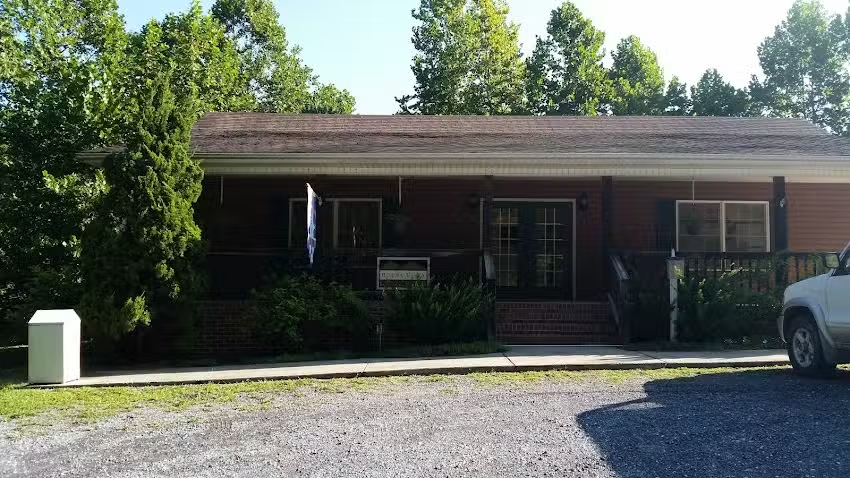
Buena Vista Visitors Center
BackThe Buena Vista Visitors Center, functioning as a de facto travel agency for the region, presents itself as a critical resource for travelers navigating the scenic but sometimes challenging terrain of this part of Virginia. Located at 595 E 29th St, it is positioned as a first-stop for tourists, but its utility is directly tied to its operational schedule, which presents both significant advantages and considerable limitations for potential visitors.
Service and Staff: The Human Element in Travel
A recurring theme among visitor experiences is the exceptional quality of the personnel. The center is staffed by individuals, described in multiple accounts as volunteers, who are consistently lauded for being knowledgeable, helpful, and genuinely friendly. This level of personalized service is a cornerstone of a valuable tourist information center. One traveler recounted an instance where, after losing their GPS signal in the mountains, the center proved to be an indispensable asset. The staff provided physical maps and brochures, a low-tech solution that became a 'lifesaver' in a situation where modern technology failed. This highlights the center's role not just as a point of interest, but as a practical problem-solving hub for those engaged in adventure travel through the nearby mountains.
The staff's expertise extends beyond simple navigation. They are noted for their deep knowledge of local history, making the center a valuable starting point for anyone interested in heritage tourism. This human touch, provided by what many describe as fantastic local people, transforms a simple information stop into a meaningful interaction, offering insights that algorithms and online searches cannot. The willingness of the staff to go above and beyond is further exemplified by an account from a hiker on the Appalachian Trail. The center's personnel allowed the hiker to leave a vehicle parked at the location for several days at no charge, a gesture of immense practical value that demonstrates a profound understanding of and support for the outdoor community that frequents the area. This flexibility positions the center as a key ally in complex vacation planning for trekkers and explorers.
A Nuanced Welcome
While the overwhelming majority of feedback is positive, it is worth noting that not every interaction begins flawlessly. One account from an international family mentioned an initial feeling of being met with skepticism by the person at the desk. While this initial impression was noted, the family was still able to use the facility's clean restrooms and ultimately rated their experience highly. This piece of feedback offers a more rounded, realistic view. It suggests that while the service is generally excellent, the experience can be subject to the human variations of any customer-facing operation. It serves as a reminder that the center is run by community members, not a standardized corporate team, which for most visitors is a significant part of its charm and effectiveness as a team of local travel experts.
Resources and Facilities: Beyond the Brochure Rack
The primary function of any visitors center is to provide information, and in this regard, the Buena Vista location excels. It is well-stocked with a wide array of brochures, pamphlets, and, most importantly, detailed paper maps of Virginia and the surrounding areas. In a region known for its natural beauty, including proximity to the Blue Ridge Parkway, the availability of these physical resources is a critical asset for any form of destination management. For travelers venturing into areas with unreliable cell service, these maps are not just a convenience but a necessity for safe and efficient travel.
The facility itself, while modest, serves its purpose well. The availability of clean restrooms is a frequently mentioned practical benefit for travelers who have been on the road. The building is also noted as having a wheelchair-accessible entrance, ensuring that its services are available to all visitors. These foundational amenities, though simple, are crucial components of a positive travel experience and reflect a thoughtful approach to visitor needs.
Operational Constraints: A Significant Hurdle
The most significant drawback of the Buena Vista Visitors Center is its highly restrictive operating hours. The center is closed entirely on Mondays and Tuesdays. From Wednesday through Sunday, it is only open for a five-hour window, from 10:30 AM to 3:30 PM. This limited schedule poses a substantial challenge for many potential visitors. Travelers arriving early in the morning, late in the afternoon, or on the first two days of the conventional work week will find the doors locked.
This scheduling could significantly impact a traveler's ability to engage in effective itinerary planning. For instance, someone hoping to get an early start on a hiking trail might arrive in town before the center opens, missing the opportunity to acquire maps or get last-minute advice on trail conditions. Similarly, visitors passing through the area later in the day will be unable to access its resources. For a service that acts as a gateway to the region, these hours can create a bottleneck and a point of frustration. Prospective visitors must plan their arrival in Buena Vista with these specific hours in mind, which reduces spontaneity and adds a layer of logistical complexity to their trip. Anyone relying on this center as their primary travel consultant must treat a visit here as a scheduled appointment rather than a casual drop-in.
Conclusion: An Invaluable but Time-Sensitive Resource
In summary, the Buena Vista Visitors Center is a tale of two distinct experiences. On one hand, when it is open, it provides an outstanding service that is highly valued by those who use it. The staff are celebrated as knowledgeable and exceptionally helpful, embodying the ideal of local experts who can provide nuanced advice and practical assistance, from offering crucial maps to accommodating the specific needs of hikers. The resources available are vital for safely enjoying the surrounding natural attractions, making it a key player in regional eco-tourism and adventure travel.
On the other hand, its severely limited hours are a major operational flaw. Being closed two full days a week and open for only a short window on other days means that this excellent resource is simply unavailable to a large number of travelers. Therefore, a potential visitor's perception of the center will be almost entirely dependent on whether their schedule aligns with its brief availability. For those who can visit during its operating hours, it is a 'must-stop' that will undoubtedly enhance their trip. For those who cannot, it remains a missed opportunity. It is an excellent example of a community-based tourist information center that excels in quality of service but is hampered by its accessibility.