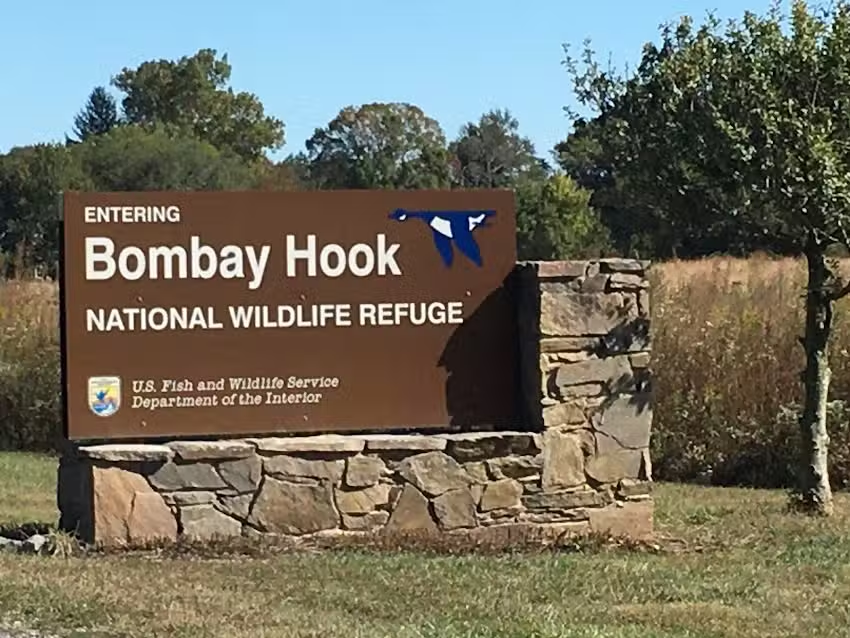
Bombay Hook National Wildlife Refuge Visitor Center
BackThe Bombay Hook National Wildlife Refuge Visitor Center serves as the primary gateway to a vast 16,000-acre expanse of tidal salt marsh and managed freshwater impoundments on Delaware's coast. Functioning less like a traditional travel agency that books distant holidays and more like a direct facilitator of immersive ecotourism, this center is the crucial first stop for anyone planning a day of serious wildlife observation. It's here that visitors can gather maps, pay the modest entrance fee ($4 per vehicle), and get expert advice before venturing into one of the most significant birding sites on the Atlantic Flyway. The refuge itself is open daily from a half-hour before sunrise to a half-hour after sunset, offering ample time for photography and viewing.
The Premier Experience: What Bombay Hook Excels At
For those passionate about birdwatching excursions and wildlife photography tours, the offerings managed by the visitor center are exceptional. The main attraction is the 12-mile wildlife auto-drive, a well-maintained loop that allows visitors to experience the diverse habitats from the comfort of their vehicle. This feature is repeatedly praised by visitors as the best way to see the refuge, providing easy pull-offs for setting up cameras and binoculars. The design of this guided self-drive tour is a significant advantage, allowing for close-up views of the fauna without significant disturbance. Along this route, three observation towers offer elevated perspectives over the freshwater pools, which are teeming with life.
The sheer diversity of birdlife is staggering, with official lists citing over 278 species identified at the refuge. During peak migration seasons in the spring and fall, the area becomes a critical stopover for countless shorebirds, ducks, and geese. Visitors frequently report sightings of snow geese, Canada geese, egrets, herons, and even bald eagles. The careful management of water levels in the impoundments ensures that at different times of the year, specific habitats are optimized to attract various species, making nearly every visit unique. This commitment to habitat management solidifies its reputation as a premier destination for ornithology tours and serious nature travel.
Facilities and Visitor Support
The visitor center itself is a clean, modern facility with interpretive exhibits, a gift shop run by the Friends of Bombay Hook, and accessible restrooms available 24/7. This level of support is a crucial part of the overall tourism experience, ensuring that visitors have a comfortable and informative starting point. The availability of picnic tables also allows families and groups to make a full day of their visit, creating a self-contained vacation package for a day trip. For those without their own equipment, the center has even been known to offer loaner binoculars, further lowering the barrier to entry for newcomers.
A Necessary Reality Check: The Challenges of a Wild Environment
No honest review would be complete without addressing the significant drawbacks, and at Bombay Hook, the primary issue is insects. Multiple visitors emphatically state that from late spring through early fall (roughly June to September), the biting flies and mosquitoes are relentless. One reviewer described the greenhead flies as aggressive enough to "practically lift you up and fly away with you." This is not an exaggeration for the unprepared. Any travel planner must advise clients that heavy-duty insect repellent is not optional, but essential. Long sleeves and pants are also strongly recommended, even on warm days, to protect against bites.
This insect problem directly impacts the hiking experience. While the refuge has five walking trails, including a boardwalk that extends into the salt marsh, many visitors find them difficult to enjoy during the bug-heavy months. Some even suggest forgoing the hikes altogether in favor of the auto tour, where the car provides a necessary shield. Another point of consideration is that while the refuge is a haven for wildlife viewing, its primary focus is avian. While deer, foxes, and turtles are sometimes spotted, those expecting a safari-like diversity of large mammals may need to temper their expectations. Finally, some visitors have noted that informational plaques and signs along the trails can be worn and weathered, a minor detail but one that points to ongoing maintenance needs in a harsh coastal environment.
Maximizing Your Visit: A Strategic Approach
To truly appreciate what Bombay Hook offers, planning is key. The experience changes dramatically with the seasons, tides, and time of day.
- Timing is Everything: The peak months for waterfowl migration are March and November, while shorebirds are most abundant in May, August, and September. The summer brings wading birds like herons and egrets, but also the aforementioned insects. Visiting early in the morning often yields more wildlife sightings and better light for photography.
- Check the Tides: High tide often pushes shorebirds from the bay into the refuge's impoundments, concentrating them for easier viewing. A quick check of the local tide charts before your holiday travel can make a significant difference.
- Come Prepared: A checklist of essential items should include: insect repellent, binoculars, a camera with a telephoto lens, water, and lunch, as there are no food services on-site.
In conclusion, the Bombay Hook National Wildlife Refuge Visitor Center is the launchpad for an extraordinary nature reserve tour. It is not a casual destination for the unprepared. However, for the well-informed visitor who arrives with the right gear and realistic expectations, it provides an unparalleled opportunity to witness the spectacle of bird migration and the serene beauty of a vast coastal marshland. Its strengths in accessibility via the auto tour and its sheer density of wildlife firmly establish it as a world-class destination for its specific, nature-focused audience.