
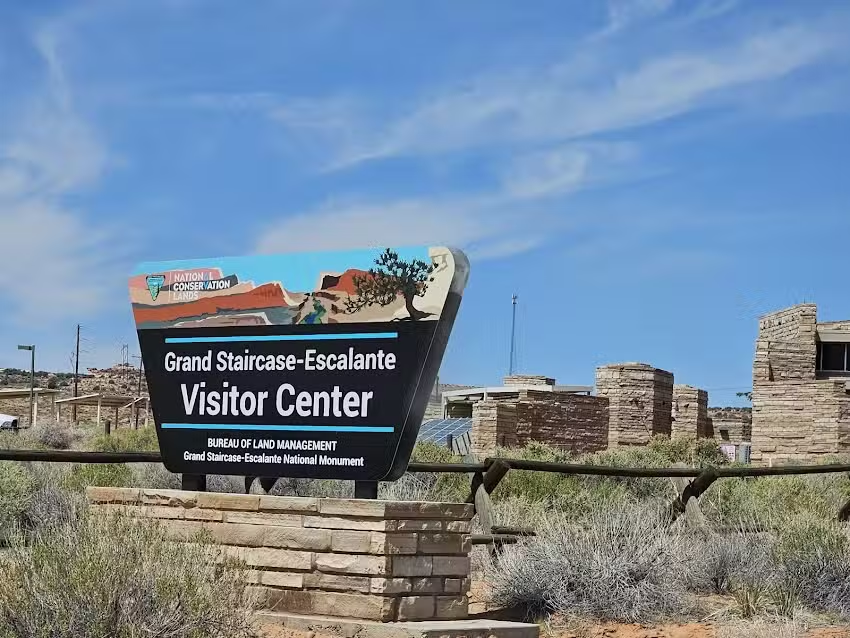
Big Water Visitor Center
BackOperated by the Bureau of Land Management, the Big Water Visitor Center serves as a critical informational gateway to the vast and rugged Grand Staircase-Escalante National Monument. This facility is not a destination in itself, but rather an essential first stop for anyone planning serious exploration of the surrounding public lands. Its primary function revolves around providing indispensable travel information, particularly concerning the monument's often-challenging and remote conditions. However, it also houses a notable collection of paleontological exhibits, adding a layer of educational appeal to its practical services.
The Dual Role: Information Hub and Dinosaur Museum
For those embarking on adventure travel within the monument, the center's resources are invaluable. Visitors can acquire detailed maps, such as for the Wahweap Hoodoos Trail, which are often more reliable than digital alternatives in an area with spotty cell service. Staff can provide the latest updates on road conditions, weather forecasts, and trail status—information that is crucial for safe and effective trip planning. This level of specialized, localized knowledge is something a generic travel agency cannot typically offer. The center acts as a key component of the region's destination management, ensuring visitors are well-prepared for the realities of this wild landscape.
Beyond its role in logistics, the Big Water Visitor Center distinguishes itself with a strong focus on paleontology. The museum, though small, features an impressive array of dinosaur fossils and bones discovered within the Grand Staircase-Escalante National Monument. This makes the area one of North America's most significant sites for new dinosaur discoveries, with fourteen new species identified since 2005. Exhibits on creatures like the Utahceratops, combined with a large mural depicting the Late Cretaceous landscape, offer a fascinating glimpse into the region's prehistoric past. This focus makes the center a particularly engaging stop for families with children and anyone with an interest in geology or natural history. The fact that all fossils are locally sourced provides a powerful connection to the surrounding terrain.
Positive Aspects and Amenities
Many visitors report highly positive interactions with the staff, describing them as knowledgeable, friendly, and eager to help. These employees can offer personalized recommendations and share insights that enhance a visitor's itinerary. The facility itself offers several practical benefits:
- No Admission Fee: The center and its museum are completely free to enter, making it an accessible stop for all travelers.
- Helpful Amenities: It provides clean, wheelchair-accessible restrooms, shaded picnic tables for a comfortable break, and a gift shop with field guides and souvenirs.
- Educational Value: For no cost, visitors gain access to world-class fossil displays and expert information that deepens their appreciation for the National Monument.
Drawbacks and Inconsistencies
Despite its strengths, the Big Water Visitor Center has several significant limitations that potential visitors must consider. The most prominent issue is its severely restricted operating hours. Being closed on Sundays, Mondays, and Tuesdays can be a major inconvenience for travelers, especially those on a tight schedule or passing through on those days. This schedule requires careful advance planning and it is highly advisable to call ahead to confirm the current hours before making a dedicated stop.
Another point of friction, noted in several visitor accounts, is the inconsistency of the staff's customer service. While many praise the employees for being helpful and friendly, others have reported experiences with staff who were perceived as unhelpful, unfriendly, or dismissive, particularly near closing time. This variability suggests that the quality of a visitor's experience can be unpredictable, depending on who is on duty. This is a crucial consideration for those relying on the center for essential tourist information.
Furthermore, it is important to manage expectations regarding the scale of the museum. Described as a single room, the exhibit space is small. While the quality of the fossils is high, those expecting a large, comprehensive museum may be underwhelmed. It is best viewed as a visitor center with an excellent paleontological exhibit, not a standalone natural history museum. The value is in the quality and local relevance of the displays, not their quantity.
Conclusion: An Essential, Albeit Flawed, Resource
The Big Water Visitor Center is an establishment with a clear and vital purpose for a specific type of traveler. For anyone serious about exploring the trails, canyons, and backcountry roads of the Grand Staircase-Escalante National Monument, a stop here is almost mandatory for safety and planning. The access to expert advice, physical maps, and current conditions is its greatest asset. The dinosaur exhibits are a significant and well-executed bonus, providing a rich educational context for the landscape.
However, its utility is hampered by restrictive hours and inconsistent service. It is not a full-service institution for comprehensive Utah travel arrangements but a specialized BLM information office. Visitors should approach it with a clear understanding of what it offers: expert, localized information for self-reliant travelers and a fascinating, free, but compact, look at the region's prehistoric life. For those whose travel plans align with its opening times, the center provides immense value. For others, it may unfortunately represent a missed opportunity.