
atlas travel home
BackLocated at 2664 SW 87th Ave in Miami, Florida, Atlas Travel Home represents a common narrative in the modern travel industry: a small, local establishment that ultimately ceased operations. The designation as "permanently closed" is the most definitive piece of information available, shaping any retrospective look at its business. For potential customers, this means the agency is no longer an option for booking vacations or seeking travel advice. For the industry, it serves as a case study on the challenges faced by traditional, brick-and-mortar travel agencies.
The physical location in a suburban Miami neighborhood, rather than a bustling commercial district, suggests the agency likely catered to a local clientele, relying on community relationships and word-of-mouth referrals. This hyper-localized approach can be a significant strength, fostering deep trust and personalized service that larger corporations struggle to replicate. A local travel consultant often knows their clients' preferences intimately, allowing them to craft highly customized itineraries that go beyond generic online packages. However, this model is also vulnerable to shifts in population, local economic downturns, and the overwhelming convenience of digital competitors.
Digital Footprint and Customer Feedback
One of the most telling aspects of Atlas Travel Home's story is its minimal digital footprint. The available data shows a single online review—a 5-star rating without any accompanying text. While a perfect score is positive, the lack of volume is a critical weakness. In today's market, travelers heavily depend on a wealth of reviews and testimonials to validate their choices. A solitary, silent endorsement is insufficient to build the broad trust necessary to attract new clients who are increasingly reliant on the internet for their travel planning. This scarcity of online feedback suggests a limited engagement with digital platforms, a significant handicap when competing against online travel agents (OTAs) and other tech-savvy firms.
The absence of a professional website, active social media channels, or a robust profile on major review sites created an information vacuum. Potential customers looking for flight bookings, hotel reservations, or information on all-inclusive resorts would have struggled to find, let alone evaluate, Atlas Travel Home's offerings online. This reality underscores a major challenge for small businesses: the necessity of investing in a digital presence to remain visible and competitive.
The Role of a Neighborhood Travel Agency
Despite its closure, it's important to consider the valuable role that agencies like Atlas Travel Home historically played. They were more than just booking agents; they were trusted advisors. A client could walk in and have a face-to-face conversation with a destination specialist who could provide nuanced advice on everything from visa requirements to the best local restaurants. This human element is often lost in the automated world of online booking engines.
Services likely offered would have included:
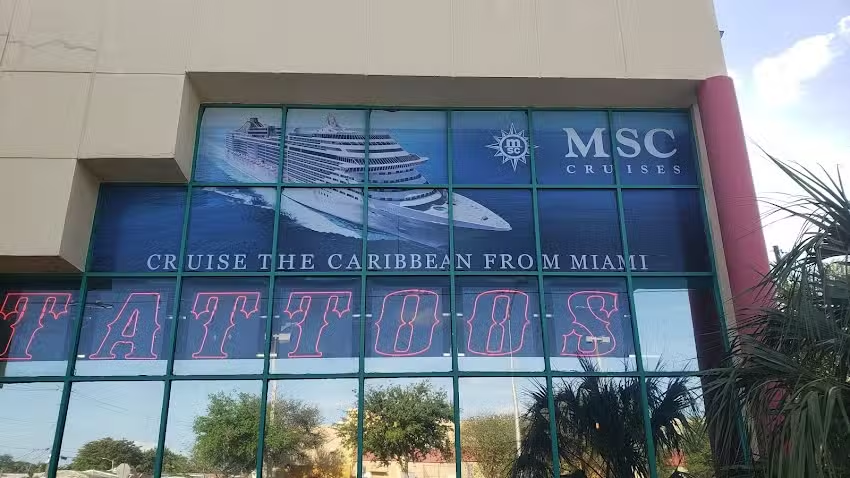
- Cruise deals: Negotiating with cruise lines to find special rates and packages for individuals and groups.
- Vacation packages: Bundling flights, accommodations, and activities to offer convenience and value.
- Corporate travel management: Assisting local businesses with their travel arrangements, a specialized B2B service.
- Personalized trip planning: Crafting unique travel experiences tailored to a client's specific interests and budget.
The single 5-star rating could be interpreted as evidence that for at least one client, the agency delivered excellent, personalized service. This is the core value proposition of a local tourism service provider. The personal touch, the ability to resolve issues directly, and the expertise of a seasoned professional are qualities that algorithms cannot fully replace.
Factors Leading to Closure
While the specific reasons for Atlas Travel Home's permanent closure are not public, several industry-wide pressures likely contributed. The rise of OTAs like Expedia and Booking.com fundamentally changed how people book travel, offering direct access and price comparison tools that empower consumers to act as their own agents. This shift significantly eroded the traditional commission-based revenue model of many travel management companies.
Furthermore, the industry is marked by thin profit margins and intense competition. Without a specialized niche, such as luxury travel, adventure tours, or complex multi-destination journeys, a generalist agency can find it difficult to stand out. The agency's name, "Atlas Travel Home," does not immediately suggest a specific specialization, which may have made it harder to market effectively to a target audience.
In conclusion, the story of Atlas Travel Home is one of unrealized potential in a rapidly evolving marketplace. The positive, albeit limited, feedback hints at a capacity for quality service. However, its apparent failure to adapt to the digital age and build a visible, trusted online brand ultimately rendered it obsolete. Its closed doors serve as a quiet reminder that in the contemporary travel landscape, even the most dedicated personal service must be paired with strategic digital engagement to ensure long-term survival and success. It stands as a silent chapter in the broader history of local travel agencies navigating the profound shifts of the 21st century.