Armel-Leftwich Visitor Center
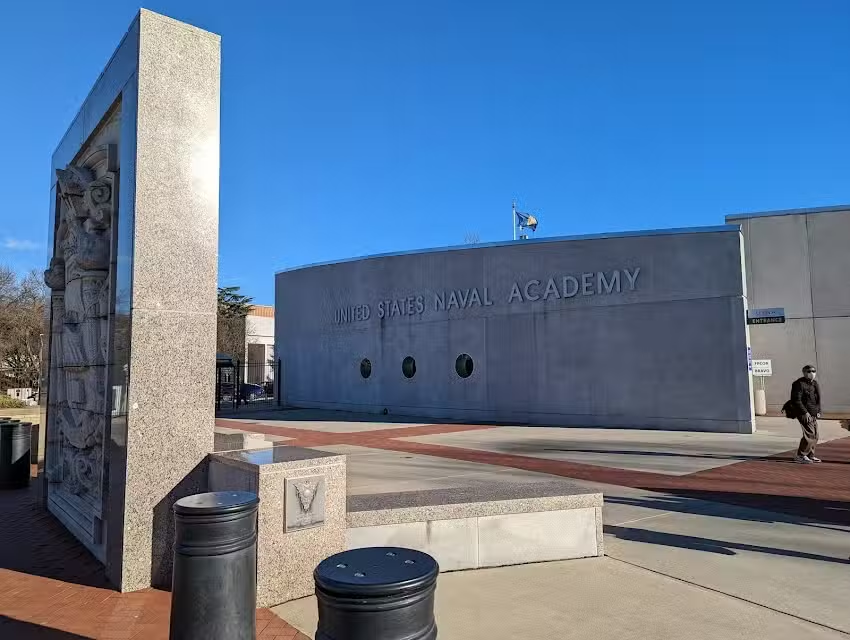
BackThe Armel-Leftwich Visitor Center serves as the exclusive entry point and official tour operator for the United States Naval Academy in Annapolis, Maryland. It functions as a specialized travel agency dedicated entirely to organizing the visitor experience for this historic and active military institution. Rather than simply providing maps and brochures, this center is the central hub for all public guided tours, managing access, information, and the narrative presented to thousands of visitors each year. Its primary function is to transform a potentially intimidating visit to a secure federal property into a structured and informative journey.
The services offered are centered around providing context and access to one of America's most significant tourist attractions. Potential customers will find that the center facilitates several types of tours, primarily a public walking tour and a more personalized riding tour using electric vehicles, often referred to as GEM cars. The choice between these options is a key part of the travel planning process for a visit to the Academy. The walking tour is the most common option, designed to immerse visitors in the campus atmosphere, while the riding tour caters to those with mobility concerns or who prefer a more condensed overview. The center also houses a gift shop and a small theater that shows an introductory film, setting the stage for the live tour.
The Merits of a Structured Experience
Based on extensive visitor feedback, the most significant asset of the Armel-Leftwich Visitor Center is the quality of its tour guides. These are not simply students reading from a script; many are long-serving, deeply knowledgeable individuals who provide rich historical context and personal anecdotes. Reviews frequently highlight guides who have been with the center for over a decade, demonstrating a profound command of the Academy's history, traditions, and the nuances of midshipman life. This level of expertise elevates a standard tour into a compelling educational session. For those seeking meaningful historical tours, this is a distinct advantage. Guides often come prepared with historical photographs and visual aids to illustrate how traditions, such as the Herndon Monument climb, have evolved over time, making the history tangible and engaging.
Another major benefit is the curated access the center provides. The Naval Academy is a vast and active campus, and navigating it without direction would be inefficient and likely uninformative. The sightseeing tours organized by the center follow a carefully planned route that includes key landmarks like the stunning Naval Academy Chapel, the crypt of Revolutionary War naval hero John Paul Jones, Bancroft Hall (one of the largest dormitories in the world), and various monuments. This structured approach ensures that visitors see the most significant sites within a reasonable timeframe, a critical component for anyone planning day trips. The narrative provided by the guides connects these physical locations into a coherent story about leadership, honor, and national service.
Additional Offerings and Accessibility
The center itself is well-equipped to handle visitors. It is wheelchair accessible, ensuring that the starting point of the travel experience is inclusive. The on-site gift shop is frequently mentioned as a positive feature, offering a wide array of Naval Academy merchandise and souvenirs that go beyond typical tourist fare. This provides a convenient way for visitors to commemorate their visit. The introductory film also serves as a valuable primer, especially for those with little to no prior knowledge of the institution, allowing them to better appreciate the details shared during the live tour.
Considerations and Potential Downsides
While the overall experience is highly rated, potential visitors should be aware of several factors inherent to visiting an active military installation. The most critical point for itinerary planning is the mandatory security screening. All visitors aged 18 and over must present a valid government-issued photo ID, such as a driver's license or passport, to gain entry. This process can lead to delays, especially during peak tourist seasons or event weekends. Forgetting proper identification will result in being denied access, a frustrating outcome for any traveler. This security protocol is non-negotiable and is the first interaction a visitor has before even reaching the visitor center.
Furthermore, the quality of any guided tour is heavily dependent on the individual guide. While the vast majority of feedback points to excellent, knowledgeable guides, the possibility of a less dynamic or engaging personality exists. This variable is a risk associated with any service provided by a travel agency or tour company. A visitor's entire perception of the Academy can be shaped by this single point of contact. Another point of potential friction is tour availability. Tours can and do sell out, particularly the more limited-capacity riding tours. Spontaneous visitors may find themselves unable to join a tour, making advance booking tours a highly recommended strategy, though not always required. Lastly, because the Academy is an active institution, certain areas may be closed to the public without prior notice due to training exercises, official ceremonies, or security alerts. This can lead to abbreviated or altered tour routes, which may be disappointing for those hoping to see a specific landmark.
Cost and Physical Requirements
The tours are not free. While many visitors feel the cost offers good value, it is a budget consideration. The walking tours are priced per person, while the riding tours are typically more expensive and may be priced per vehicle. Prospective customers should verify current pricing on the official website before their visit. Additionally, the standard walking tour covers a significant amount of ground and can last over an hour. While the pace is generally manageable, it may pose a challenge for individuals with limited mobility or stamina. This makes the availability of the riding tour a crucial alternative, but its higher cost and limited capacity must be factored into the decision-making process.
Conclusion for the Prospective Visitor
The Armel-Leftwich Visitor Center is an effective and highly necessary tour operator for the U.S. Naval Academy. It successfully bridges the gap between a secure, operational military base and a public eager to understand its legacy. The primary strengths lie in its exceptionally knowledgeable guides who bring the history of the institution to life and the structured access it provides to an otherwise complex campus. It is the definitive resource for anyone looking to arrange historical tours of this national landmark.
However, the ideal visitor is one who plans ahead. Understanding the strict ID requirements, considering the physical demands of a walking tour, and checking tour availability in advance are crucial steps. The experience is best suited for history enthusiasts, prospective students, military families, and tourists seeking a substantive alternative to typical vacation activities. By managing expectations regarding security procedures and the inherent variables of a live tour, visitors can fully appreciate the unique opportunity the center provides to step inside the gates of a prestigious and storied American institution.