
Visalia Transit
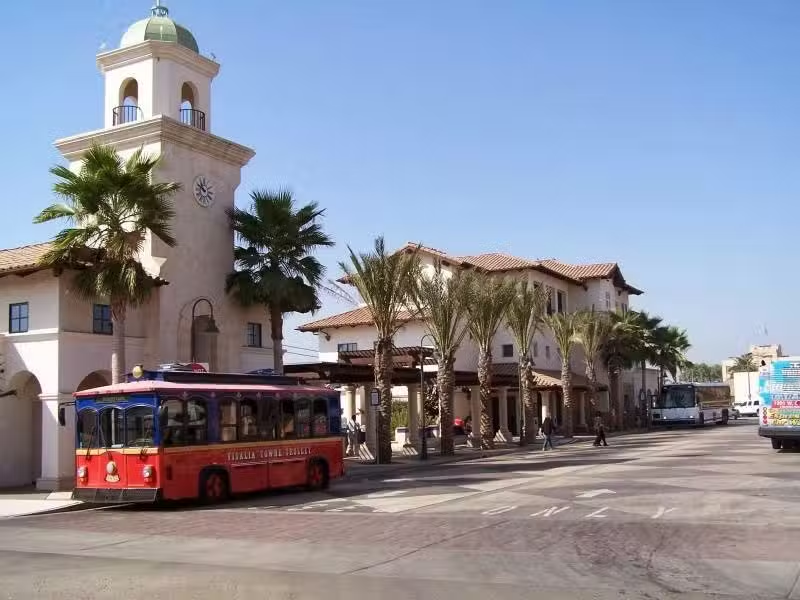
BackOperating from its hub at 425 E Oak Ave, Visalia Transit serves as the backbone of public transportation for the city of Visalia and surrounding communities. While categorized by some systems as a travel agency, its function is firmly rooted in providing essential daily transit through a network of fixed routes, specialized shuttles, and on-demand services. An analysis of its operations, user feedback, and service offerings reveals a system with a commendable on-the-road performance that is sometimes contrasted by inconsistent experiences at its central transit hub.
The On-the-Road Experience: Service Strengths
For many riders, the quality of a transit system is defined by its core function: getting passengers to their destinations safely and on time. In this regard, Visalia Transit frequently earns high marks. Multiple user accounts praise the punctuality of the bus service, noting that vehicles arrive as scheduled and complete their routes in a timely manner. This reliability is a cornerstone of effective public transport, allowing commuters and travelers to depend on the service for their daily schedules.
Beyond punctuality, the professionalism and demeanor of the drivers are consistently highlighted as a major positive. Riders have shared stories of drivers who are not only nice and professional but who also demonstrate exceptional conduct in challenging situations. One passenger recounted a driver skillfully de-escalating a dispute between an elderly couple, showcasing a level of training that goes beyond simple operation of the vehicle. Another user witnessed a driver showing compassion by allowing a young woman to board even though she had forgotten her fare—a small act of kindness that leaves a lasting positive impression. These interactions suggest a workforce that is generally committed to positive customer service and passenger safety, making the journey itself a secure and pleasant experience.
Diverse and Accessible Service Offerings
Visalia Transit's portfolio of services extends well beyond standard city routes, positioning it as a key player in regional mobility and tourist transport. The agency operates an extensive network of fixed routes that connect residential areas with key destinations like shopping centers, medical clinics, and schools. This makes it a vital resource for residents who rely on public transport for daily errands, work, and education.
The service offerings include several key programs:
- V-LINE: This commuter service provides a crucial link between Visalia and Fresno, with stops at key locations like the Fresno Yosemite International Airport and California State University, Fresno. Equipped with Wi-Fi, USB charging ports, and comfortable seating, the V-LINE is a modern and affordable alternative to driving for students, airport travelers, and commuters.
- Sequoia Shuttle: Operating seasonally, this service offers a convenient and eco-friendly way to visit the majestic Sequoia National Park. For a round-trip fee, which includes the park entrance, visitors can avoid the hassles of traffic and parking, making the natural wonder more accessible. This service is a prime example of effective destination management.
- Dial-A-Ride: This paratransit service provides essential curb-to-curb transportation for seniors and individuals with disabilities, ensuring that mobility is accessible to all members of the community.
- Visalia Connect: An on-demand microtransit service that functions like a rideshare, allowing users to book trips through an app for convenient travel within the service area.
Furthermore, all Visalia Transit vehicles are wheelchair accessible, underscoring a strong commitment to inclusivity. The extensive operating hours, running from 5:00 AM to 9:00 PM seven days a week, provide a wide window of service that accommodates various schedules.
Challenges at the Transit Center
Despite the positive experiences reported during transit, the Visalia Transit Center itself is the subject of significant criticism. Several reviews point to a disconnect between the quality of the on-bus service and the atmosphere at the hub. A recurring issue is the performance of the security staff. Multiple passengers have described security as lax or inattentive. One detailed account noted that security personnel fail to enforce the posted no-smoking policy near the building's entrance. This forces all patrons, including children and pregnant women, to walk through clouds of cigarette and marijuana smoke to access the facility, creating an unwelcoming and unhealthy environment. Specific guards were described as being more focused on their phones or personal conversations than their duties.
Another user, while generally positive about the bus service, rated the security as "three-star to say the least," acknowledging the difficulty of the job but suggesting that better incentives might improve performance. These critiques detract from the overall perception of safety and family-friendliness at the station.
Customer Service and Maintenance Concerns
The issues at the transit center are not limited to security. The staff at the ticket window have been described by some as rude and frequently having an attitude. As the first point of direct contact for many customers needing to purchase passes or get information, this poor level of service can sour the entire experience before a passenger even boards a bus. This is a critical area for improvement in their overall booking system and customer interaction.
In addition to personnel issues, a potential maintenance concern was raised in one review where a user inquired about legal recourse for a slip and fall allegedly caused by an oil spill. While this is a single, unverified claim, it points to the importance of rigorous safety and cleanliness protocols on the premises. On a more positive note, the janitorial staff received praise for being polite and doing great work, and the station's interior is noted for its excellent temperature control, serving as a comfortable waiting area.
Conclusion: A Tale of Two Experiences
Visalia Transit presents a dual reality for its users. On one hand, it is a well-functioning and diverse public transportation system with professional drivers, reliable schedules, and a range of services that effectively connect the community and beyond. Its role as a tour operator for destinations like Sequoia National Park adds significant value for both residents and tourists. The on-the-road experience is frequently positive, characterized by safety, courtesy, and efficiency.
On the other hand, the experience at the Visalia Transit Center can be lacking. Issues with security enforcement, customer service at the ticket counter, and potential maintenance lapses create an environment that does not match the quality of the transportation service itself. For potential customers, this means they can likely expect a good journey once aboard the bus, but may need to navigate a less-than-ideal environment at the station. Addressing the shortcomings in facility management would be the key to elevating Visalia Transit from a good transportation provider to an excellent all-around public service.