Adventure Whale Watching
BackAdventure Whale Watching positions itself in the San Diego market with a distinct focus on intimate and high-speed marine excursions. Unlike larger vessel operators, this travel agency specializes in utilizing Rigid Inflatable Boats (R.I.B.s), which they state are customized, decommissioned vessels originally used by the Navy SEALs. This choice of watercraft is central to their business model, promising a fundamentally different kind of whale watching tour. The core appeal is the small group size, with public tours typically limited to six passengers, ensuring that each guest has an unobstructed, 360-degree view. This contrasts sharply with the experience on larger boats that can hold over 100 passengers.
The Small-Boat Advantage
The primary benefit highlighted by customers and the company itself is the personal nature of the journey. With a maximum of 6 to 10 passengers per boat, the experience is far from the crowded rails of a larger ship. This fosters a more direct interaction with the captain, who often doubles as a naturalist or marine biologist. Reviews frequently praise the knowledge and passion of the crew, with Captains Kyle, Rick, and Chris being mentioned by name for their expertise and determination to locate wildlife. This transforms the trip from a passive viewing into an educational marine wildlife safari. The low profile of the R.I.B.s also brings passengers closer to the water's surface, reportedly creating an "arms reach" proximity to dolphins and other sea life, and significantly reducing the likelihood of seasickness compared to the roll of larger vessels.
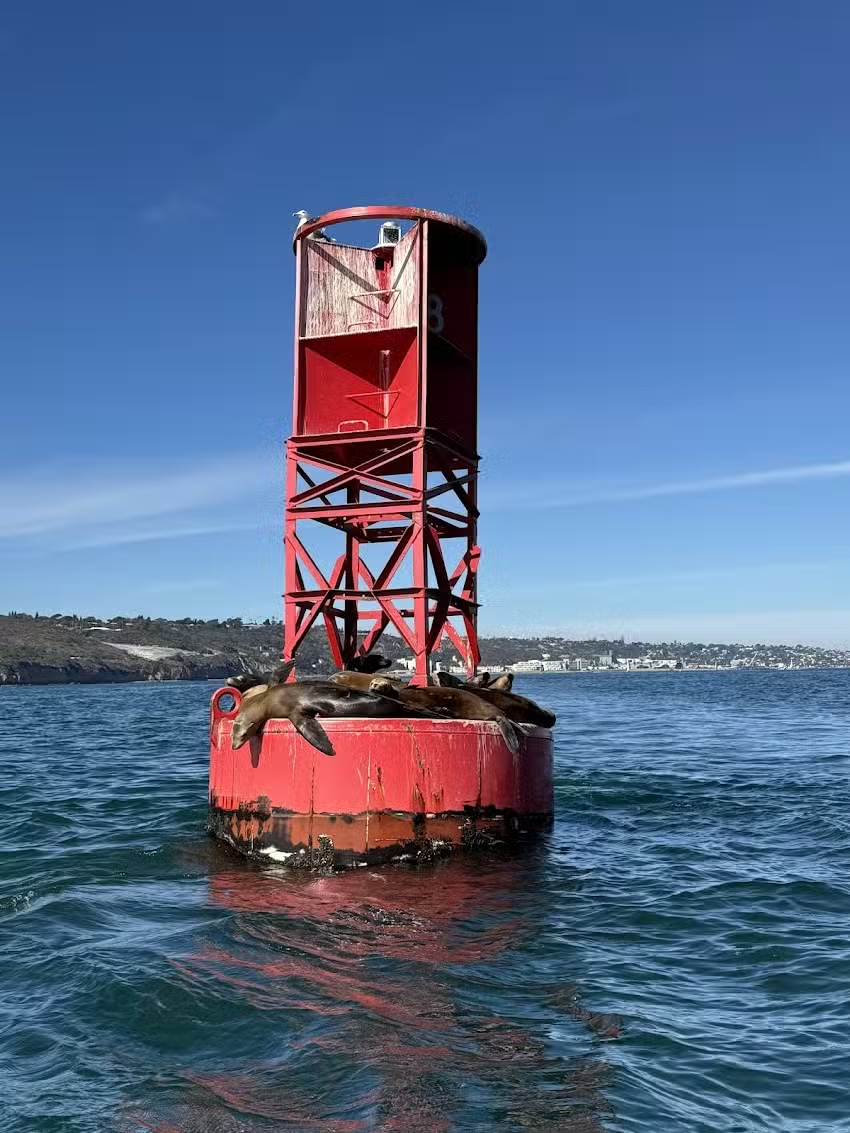
Another significant advantage is speed. These boats can travel much faster than traditional tour vessels, allowing them to cover more ocean territory in a single excursion. This mobility increases the probability of encountering diverse marine life. While whale sightings are the main draw, the company is proficient at finding massive pods of dolphins, sometimes numbering in the hundreds, as well as sea lions, harbor seals, and various pelagic birds. Many five-star reviews come from trips where no whales were seen, but the sheer spectacle of a dolphin "super-pod" or the thrill of the high-speed ride made the outing a resounding success.
A Year-Round Operation with Seasonal Variety
Adventure Whale Watching operates throughout the year, capitalizing on San Diego's diverse migratory seasons. Potential customers should align their expectations with the time of year they plan to visit.
- Winter and Spring (December - April): This is the prime season for observing the southward, and then northward, migration of over 20,000 California Gray Whales. These whales travel relatively close to the coast on their journey between feeding grounds in Alaska and calving lagoons in Baja California.
- Summer and Fall (June - September): The warmer months offer the chance to see the largest animal on Earth, the Blue Whale. San Diego is a feeding ground for a large population of these magnificent creatures. Humpback Whales, known for their acrobatic breaches, are also more commonly sighted during this period, along with Fin and Minke Whales.
It's important to note that dolphins are a constant presence, with massive pods of common dolphins frequently sighted on tours regardless of the season, providing a reliable and exciting component to any trip.
Important Considerations and Drawbacks
While the company boasts an exceptionally high rating, potential clients must be aware of several key factors. The most significant is the inherent uncertainty of wildlife viewing. The company is transparent on its website that it does not guarantee sightings of any specific animal and does not offer refunds or vouchers if whales are not found. This policy stands in contrast to some larger competitors who may offer a "whale guarantee" in the form of a free return trip. Therefore, this tour operator is best suited for travelers who appreciate the entire ocean experience and the thrill of the search, rather than those solely focused on checking a whale off their list.
Accessibility and Comfort Limitations
A critical drawback is the lack of accessibility. The provided data explicitly states the entrance is not wheelchair accessible, and the company's FAQ confirms this by requiring private tour bookings for participants with disabilities so that special accommodations can be attempted. The nature of boarding a low-profile R.I.B. from a dock makes it unsuitable for individuals with significant mobility challenges. Furthermore, while the boats are stable, the ride can be bumpy and fast. The company requires private bookings for pregnant women and has a minimum age of four for public tours, indicating the intensity of the ride may not be for everyone. It is an adventure travel experience, and comfort is different than on a large yacht with indoor seating and restrooms. Guests are advised to dress in warm layers, as the temperature on the ocean is significantly cooler, and the speed of the boat creates a considerable wind chill.
Logistics and Booking
The business is located at 1380 Harbor Island Drive in San Diego. The check-in process is described by reviewers as smooth and professional. Due to the very limited capacity on each boat, advance booking is essential, especially during peak seasons. The company's 24-hour operational status likely refers to its online booking system rather than round-the-clock tour departures. Public tours are sold per seat, while private tours can be booked for groups wanting the entire boat for a more personalized trip. In summary, Adventure Whale Watching offers a thrilling and deeply personal alternative to conventional San Diego boat tours. Its strengths lie in the expertise of its crew, the excitement of the high-speed R.I.B.s, and the unparalleled intimacy of its small-group format. However, these same strengths create limitations; the experience is not for everyone. It is an excellent choice for adventurous individuals, couples, and small groups who are physically able and value an authentic, unpredictable encounter with marine nature, but a poor fit for those requiring accessibility or the stable comforts of a large vessel.