
Florida Keys Flight Academy
BackLocated at the Florida Keys Marathon International Airport, the Florida Keys Flight Academy presents a dual identity. For some, it is a rigorous training ground for aspiring aviators; for others, it is a provider of unique aerial excursions over the islands. This establishment serves a broad spectrum of clients, from individuals pursuing a private pilot license to tourists seeking a memorable vacation activity. Its offerings are diverse, ranging from comprehensive pilot certification programs to singular scenic air tours.
Professional Flight Training
The academy has garnered a reputation as an effective place for flight training, particularly for students who may have found their progress stalled at other institutions. Client testimonials frequently highlight an accelerated learning curve, with some student pilots achieving their first solo flight within a week of starting their program. This rapid progression is a significant draw for those eager to earn their wings efficiently. The curriculum covers a full range of certifications, including Private Pilot (PPL), Instrument (IFR), Commercial, and Certified Flight Instructor (CFI).
A notable aspect of the training environment is its location at Marathon Airport (KMTH), which is an untowered airport. For new students, this can be an advantage, offering a less congested and potentially less intimidating atmosphere to master the fundamentals of flight without the constant pressure of complex air traffic control communications. The academy leverages this, providing what many describe as a solid foundation before encouraging students to gain experience in busier mainland airspace. The owner, Sol Bradman, and his team of instructors are consistently praised for their hands-on, supportive, and friendly approach, creating an environment conducive to learning and building confidence.
Considerations for Advanced Students
While the untowered field is beneficial for initial training, prospective commercial pilots should consider the need for supplemental experience in controlled airspace. The academy acknowledges this, framing the Marathon location as an ideal base from which to build foundational skills before venturing into more complex environments. Students aiming for a career with major airlines will need to ensure they accumulate sufficient experience managing the demands of towered airports, which may require training flights to other locations.
Tourist and Recreational Flying Experiences
Beyond professional training, the academy is a significant player in local aviation tourism. It offers a variety of services designed for visitors, making it one of the more distinct Florida Keys attractions.
Scenic Air Tours
For those not looking to become pilots, the academy provides several scenic air tours that offer an aerial perspective of the Keys' famous landmarks. Popular packages include flights over the Sombrero Reef Lighthouse, the Seven Mile Bridge, and tours that focus on spotting marine life like sharks, rays, and dolphins in the clear turquoise waters. These tours are priced for small groups and vary in duration, providing accessible options for tourists on different budgets and schedules.
The Warbird Experience
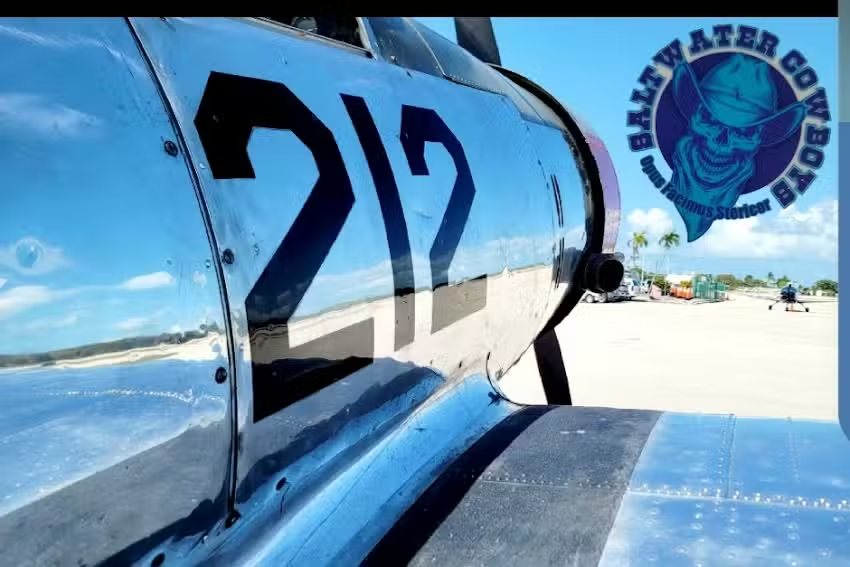
The most unique offering, setting the academy apart from nearly any other flight school, is the warbird flights. This is a historical deep-dive centered around a meticulously maintained 1942 Vultee BT-13 Valiant, a basic trainer aircraft used extensively in World War II. This experience is more than just a flight; it begins in a recreated WWII pilot briefing room, immersing participants in the history of the era before they even see the plane. This offering appeals directly to history enthusiasts and those seeking high-adrenaline adventure travel. Participants are given the opportunity to take the controls under the supervision of an instructor, making it a hands-on piece of living history.
Discovery Flights
A bridge between tourism and training is the discovery flight. This introductory flight is often purchased as a gift or by individuals curious about aviation. It serves as a practical test run, allowing a potential student to handle the controls and decide if pursuing a pilot's license is the right path for them. Reviews indicate these flights have been pivotal in inspiring new pilots, solidifying their commitment to aviation after a single positive experience.
Operational Environment and Staff
The academy's operational success is frequently attributed to its staff. The owner, Sol Bradman, is a visible and involved presence, often praised for his passion and dedication to his students' success. The team of instructors and administrative personnel also receives positive mentions for being professional, accommodating, and contributing to a welcoming atmosphere. This supportive culture is a recurring theme in customer feedback and appears central to the academy's business model.
A Note on Airport Infrastructure
Potential clients and visitors should be aware that the Marathon International Airport recently completed a major runway reconstruction project. The runway was temporarily closed for about 50 days in 2025 to shift it 40 feet and bring it into compliance with modern FAA standards. This project is now complete, and the airport is fully operational with improved, modern infrastructure. This recent upgrade is a net positive for anyone flying into or out of Marathon, ensuring enhanced safety and operational standards for the foreseeable future.
Summary of Strengths and Weaknesses
Strengths:
- Accelerated and Effective Training: Highly regarded for helping students, especially those feeling stuck, to progress quickly.
- Unique Historical and Tourist Flights: The BT-13 Warbird experience is a standout attraction that offers something beyond typical flight school services.
- Supportive Staff and Culture: Overwhelmingly positive feedback points to a friendly, passionate, and effective team led by an engaged owner.
- Location Benefits: Training at an untowered field provides a great learning environment for beginners, with beautiful scenery as a constant backdrop.
- Modernized Infrastructure: The recently renovated runway at KMTH ensures compliance with the latest safety standards.
Points to Consider:
- Untowered Airfield Limitations: While great for primary training, students will need to seek experience at towered airports for a complete commercial pilot education.
- Cost: Aviation is inherently expensive. While the academy is described as a good value from a career perspective, the financial commitment for a private pilot license or other ratings is significant.
- Niche Appeal: The strong focus on historical aviation and specific types of training may not suit every aspiring pilot or tourist, who might be looking for different aircraft or a more standardized, large-scale school environment.
In conclusion, the Florida Keys Flight Academy successfully caters to two distinct markets. For the aspiring pilot, it offers an efficient and supportive path to certification. For the visitor, it provides a memorable entry into the world of adventure travel and aviation tourism, with experiences that are both thrilling and historically rich.