Scotty’s Castle
BackScotty's Castle, known formally as Death Valley Ranch, presents a complex picture for any prospective visitor. It is less a straightforward destination and more a compelling, ongoing saga of ambition, natural disaster, and painstaking restoration. For those engaged in vacation planning, understanding its current status is paramount: the property is not open for general admission. Its gates have been largely closed to the public since a catastrophic flash flood in October 2015, an event that fundamentally altered its accessibility and operations.
The Legend and the Allure
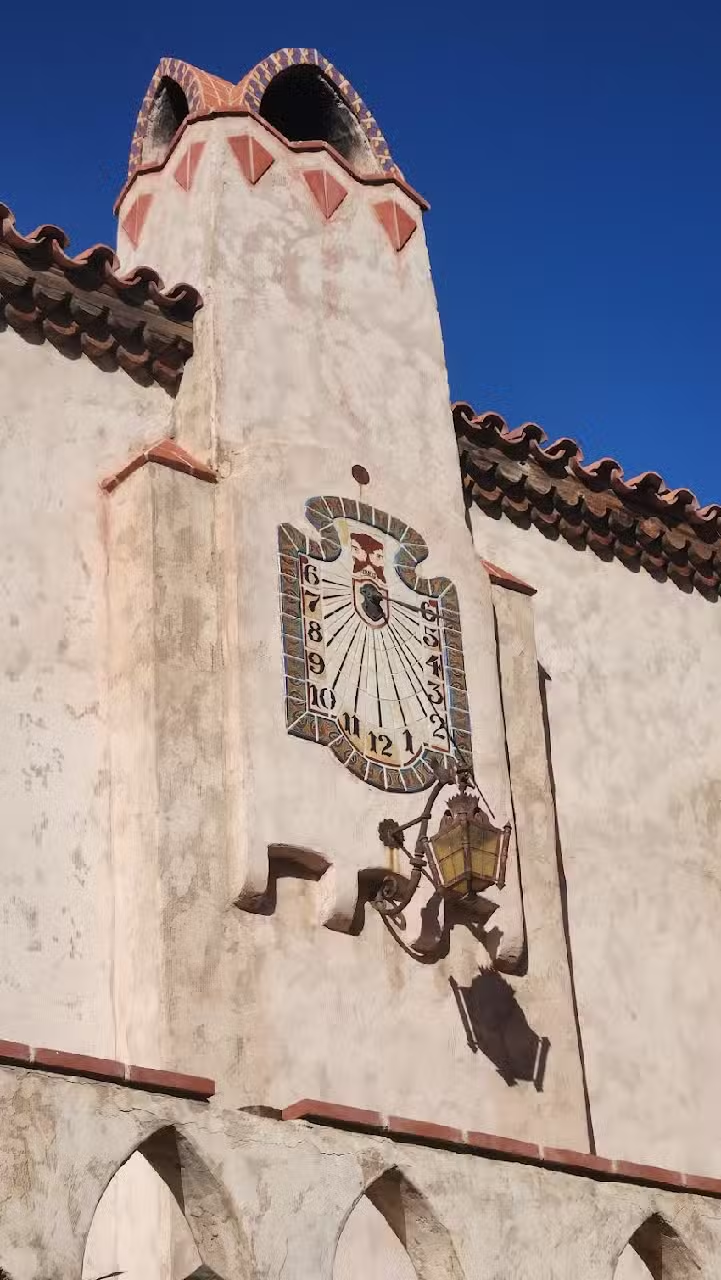
The core appeal of Scotty's Castle has always been its incredible origin story, which is more theatrical than historical. It's the tale of an unlikely friendship between Albert Mussey Johnson, a wealthy Chicago insurance magnate, and Walter Scott, a charismatic con man and former performer in Buffalo Bill's Wild West show better known as "Death Valley Scotty." Scott lured Johnson to the desert with fraudulent claims of a secret gold mine. When Johnson discovered the deception, instead of anger, a lasting friendship was born. The sprawling Spanish Colonial Revival villa that resulted was Johnson's vacation home, built between 1922 and 1931, but Scotty, the showman, convinced the world it was his, paid for with fictional gold. This narrative of frontier bravado meeting industrial wealth is the foundation of the castle's identity as a premier tourist attraction.
Before its closure, the castle was a hub for guided tours, with National Park Service rangers in period clothing leading visitors through rooms filled with original custom furnishings, handcrafted tiles, and extravagant tapestries. Highlights included a 1,121-pipe theater organ and intricate details that spoke to the immense investment and vision behind the project. It functioned not just as a museum but as a window into the roaring '20s, an oasis of improbable luxury carved into the harsh landscape of Grapevine Canyon.
The Harsh Reality: A Decade of Recovery
The positive aspects of this historical landmark are currently overshadowed by the stark reality of its closure. On October 18, 2015, a storm unleashed what was described as a wall of water on the property, depositing feet of mud and debris, destroying roads, and crippling essential utilities. The initial damage was estimated at over $47 million, a figure that has since climbed to around $66 million due to subsequent challenges and rising costs.
The recovery has been a marathon, beset by numerous setbacks. In April 2021, a fire destroyed the historic garage that had been repurposed as the visitor center, further complicating restoration efforts. The COVID-19 pandemic impacted funding, as a significant portion of the repair costs were intended to come from park visitor fees. Subsequent storms and floods in the region have also diverted resources, repeatedly pushing back the projected reopening date from 2021 to 2023, then 2025, and now to a hopeful late 2026 or even 2027.
Limited Access and Future Prospects
For travelers eager to experience this piece of history, the situation requires patience and diligent planning. The National Park Service, in partnership with the Death Valley Natural History Association, has occasionally offered extremely limited, reservation-only "Flood Recovery Tours." These are not the traditional mansion tours of the past. Instead, these special tour packages offer a unique, behind-the-scenes look at the grounds, focusing on the immense scale of the flood damage and the complex, ongoing restoration work. These walking tours, available on select weekends, sell out almost instantly and are the only legal way to access the site.
The restoration itself is a monumental undertaking. It involves not just repairing buildings but re-engineering the entire infrastructure—water, sewer, and electrical systems—to be more resilient against future floods. Protective berms and flood walls are being constructed to better shield the historic structures. It is a process the Park Service is determined to do right, rather than fast, to preserve the integrity of this unique site for future generations.
- The Good: An incredible, uniquely American story of friendship and ambition. The architecture is a stunning anomaly in the desert. The ongoing restoration demonstrates a profound commitment to historic preservation. The limited-access tours offer a rare glimpse into a massive recovery effort.
- The Bad: The property is closed to the general public. Access is extremely restricted and requires booking a tour far in advance. The full reopening date remains uncertain and has been repeatedly delayed. Essential amenities are non-existent on-site during the closure.
Ultimately, Scotty's Castle remains a significant destination for those interested in cultural tourism and adventure travel, but its current state is one of transition. It is a testament to both human ingenuity and the overwhelming power of nature. Any potential visitor must shift their expectations from that of a fully operational museum to that of a live restoration project. The best course of action for anyone planning a trip to Death Valley with the castle in mind is to frequently check the official National Park Service website for the most current information on reopening timelines and the potential availability of future recovery tours.