
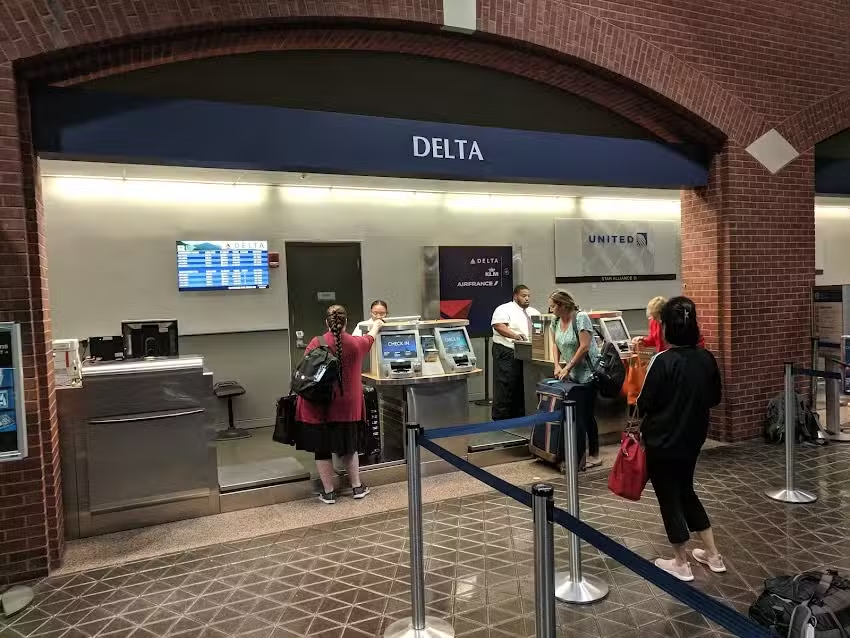
Delta Check-in
BackThe Delta Check-in counter at Roanoke-Blacksburg Airport (ROA) serves as the primary point of interaction for passengers flying with the airline from this location. It is not a traditional travel agency where one might arrange comprehensive vacation packages, but rather a critical service hub for existing ticket holders. The functions performed here—checking baggage, issuing boarding passes, handling ticketing problems, and providing passenger assistance—are fundamental to the air travel process. However, customer experiences suggest a significant inconsistency in the quality of service provided, ranging from highly commendable to deeply problematic. An analysis of passenger feedback reveals a stark contrast between commendable individual employee performance and significant systemic failures.
Customer Service: A Tale of Two Extremes
The level of customer service at this location can be unpredictable, representing both the best and worst aspects of airline ground support. On one hand, there is clear evidence of staff members who are exceptionally capable and empathetic, providing invaluable assistance during stressful situations. One passenger recounted an experience involving a medical emergency that prevented a family member from making their flight. In this instance, two employees, Justin Toney and Henry, were singled out for their kindness, efficiency, and helpfulness in arranging a ticket exchange. This type of support is precisely what travelers hope for when unforeseen circumstances disrupt their trip planning. It highlights the potential for positive, solutions-oriented service from the local Delta team, demonstrating that the right personnel can turn a potential travel disaster into a manageable situation.
Conversely, other reports paint a drastically different picture, one defined by frustration and a perceived lack of accountability. These negative experiences are not minor grievances but point to fundamental operational deficiencies that can severely impact travelers. The inconsistency suggests that while skilled individuals are present, they may be hampered by larger issues or that service quality is highly dependent on which specific staff members are on duty at any given time.
Operational Challenges: Staffing and Overbooking
Two major areas of concern emerge from customer feedback: severe staffing shortages at the check-in desk and questionable practices related to overbooked flights. These issues go beyond simple inconvenience and can lead to significant financial and logistical consequences for passengers.
Severe Understaffing at the Counter
One of the most basic expectations for any airport services is the presence of staff to perform essential duties. A particularly troubling report from a passenger detailed a complete absence of personnel at the Delta counter to check in baggage. The traveler claimed to have waited for two hours without any employee appearing to process their luggage. In the context of air travel, where timeliness is paramount, a two-hour delay is unacceptable and almost guarantees a missed flight. This scenario creates immense stress and leaves passengers feeling abandoned. It raises serious questions about scheduling, staffing levels, and management at the location. For a customer who has already navigated the process of securing airline tickets, arriving at the airport to find an unstaffed counter is a complete failure of the service promise. This lack of personnel effectively paralyzes the check-in process, rendering a valid flight booking useless if bags cannot be checked in time.
Handling of Involuntary Bumping and Compensation
Perhaps the most serious allegations concern the handling of an overbooked flight, a situation where an airline sells more tickets than available seats. While overbooking is a legal and common industry practice, it is strictly regulated by the Department of Transportation (DOT) to protect consumers. A detailed account from one passenger who was involuntarily bumped from a flight raises multiple red flags regarding the procedures followed at the Delta ROA counter.
The passenger alleged several breaches of protocol. First, they were not informed of their rights as a passenger being involuntarily denied boarding, which is a DOT requirement. Second, the compensation offered—a promised $500 Visa card—was allegedly not delivered. Instead, the passenger received a $500 Delta eVoucher that expired on the same day it was issued, making it practically worthless and a far cry from the flexible cash equivalent promised. This discrepancy between the promised compensation and the actual delivered item is a significant bait-and-switch. Furthermore, the passenger claimed the initial compensation offer was already below the legally mandated amount, which, according to DOT regulations, can be up to 400% of the one-way fare value depending on the length of the delay.
To compound the issue, the passenger accused a Delta employee of falsely reporting to a supervisor that the passenger had volunteered to give up their seat. This is a critical distinction, as compensation rules and passenger rights differ greatly between voluntary and involuntary bumping. The situation was made even more frustrating when the passenger observed Delta offering double the compensation ($1000 Visa gift cards) to volunteers on the rescheduled flight the next day, highlighting a stark inconsistency in how these situations are managed. This experience suggests a potential breakdown in adherence to federal regulations and ethical customer treatment, turning what should be a standardized, transparent process into a confusing and unfair ordeal for the affected traveler.
Conclusion: What Potential Flyers Should Know
For travelers considering flying Delta out of Roanoke-Blacksburg Airport, the check-in experience appears to be a gamble. There is a demonstrated potential for receiving outstanding and compassionate assistance from skilled employees who can adeptly handle complex ticketing issues. However, there is also a documented risk of encountering significant operational failures. The possibility of arriving at an unstaffed check-in counter or being subjected to improper procedures during an overbooking situation is a serious concern.
Potential customers should be prepared for this inconsistency. It is highly advisable to arrive at the airport well in advance of the recommended time to allow a buffer for potential understaffing delays. Furthermore, all passengers should familiarize themselves with the DOT's 'Fly Rights,' especially the rules regarding compensation for involuntary bumping. Knowing your rights can empower you to advocate for yourself if you find yourself in a similar situation. While you might find some of the best travel deals with the airline, the ground service at this specific location could present challenges. The journey begins long before boarding, and the service at the airline check-in counter sets the tone for the entire trip. At Delta's ROA location, that tone is unfortunately unpredictable.