US Visitor Center
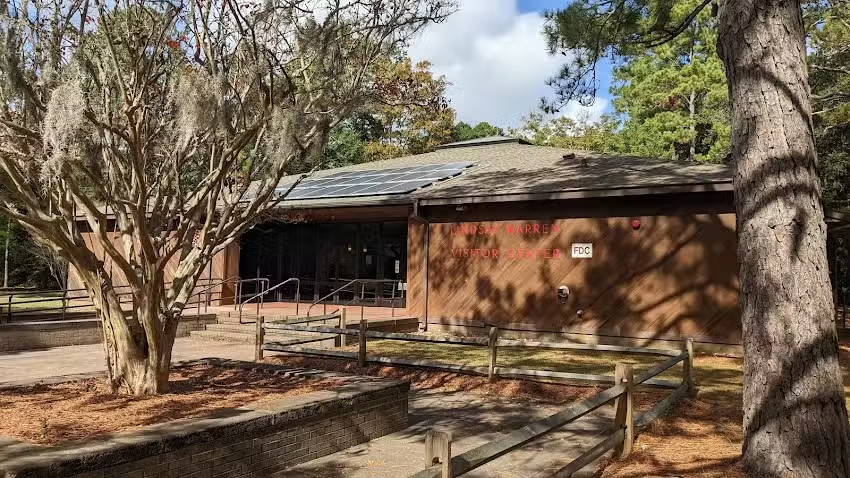
BackLocated at 1401 National Park Drive in Manteo, the entity known as the US Visitor Center serves a very specific and focused purpose, one that sets it apart from a typical commercial travel agency. It is, in fact, the official Lindsay Warren Visitor Center for the Fort Raleigh National Historic Site, operated by the National Park Service. This distinction is crucial for any potential visitor. While it provides indispensable services for trip planning, its scope is dedicated entirely to enriching the visitor’s understanding and experience of this singular, historically profound location, rather than arranging broad vacation packages.
The center’s primary strength, lauded consistently by visitors, is its role as an educational gateway. Upon arrival, guests are greeted by staff and volunteers described as exceptionally friendly, pleasant, and knowledgeable. This human element is a significant asset; personnel are adept at answering questions with care and providing deep context to the site's history. For many, especially those on family vacations, the engaging staff and well-maintained exhibits make the visit a highlight of their trip. The center is universally praised for being clean, well-displayed, and offering free entry, making it an accessible starting point for everyone. Furthermore, its wheelchair accessibility ensures that visitors with mobility challenges can fully participate.
The Educational Experience: More Than Just a Stop
The core of the visitor center's offering is its interpretive content. A frequently mentioned 17-minute informational video provides a concise and clear overview of the history of the Roanoke Colony, often referred to as the Lost Colony. This film serves as an excellent primer before visitors venture out onto the historic grounds. The exhibits are thoughtfully curated, featuring artifacts uncovered from archaeological digs just yards away from the building. This tangible connection to the past—seeing items used by the colonists—brings the story to life in a way that words alone cannot. These displays delve into the complex history of the area, covering not just the English settlement attempts of the 1580s, but also the history of the Carolina Algonquian people and the significant Freedmen's Colony established there during the Civil War. This comprehensive approach positions the center as a key resource for immersive cultural tours of the region's layered past.
Another highly valued feature is the presence of active Park Rangers who provide scheduled talks and presentations. These sessions offer expert insights and an opportunity for interactive learning, elevating the experience beyond a simple self-led tour. The combination of static exhibits, the introductory film, and live presentations creates a robust educational framework that prepares visitors for a more meaningful exploration of the surrounding historic site.
Setting Realistic Expectations: What the Center Is and Isn't
It is important to clarify the center's function to avoid misconceptions. While it is an essential tool for planning your visit to Fort Raleigh, it does not operate as a commercial tour operator. You will not find services here for booking flights, hotels, or rental cars. Its mission is educational and interpretive. This is a place to get maps, learn about ranger-led programs, understand the historical significance of the trails, and gain context before seeing the earthen fort remains. Think of it less as a general travel consultant and more as a specialized historical facilitator for a very specific destination.
One nuanced piece of feedback highlights this distinction perfectly. A visitor who enjoyed a free tour noted that it was more of a “sitting presentation” than a “walking tour.” This is not a significant flaw but an important detail for managing visitor expectations. The information was excellent, but the format was more lecture-based. This insight is valuable for those anticipating a physically active guided walk; instead, they should be prepared for a deeply informative, albeit stationary, talk. This approach may be highly beneficial for those with limited mobility but could be a point of minor disappointment for others expecting a more ambulatory experience.
Strengths and Areas for Consideration
Based on visitor feedback and the center's operational model, we can identify clear pros and cons for potential visitors.
Positives:
- Expert Staff: The friendly and knowledgeable National Park Service rangers and volunteers are a standout feature, providing excellent information and a welcoming atmosphere.
- High-Quality Exhibits: The center houses well-maintained displays with genuine artifacts that effectively tell the multifaceted story of Roanoke Island.
- Informative Film: A 17-minute video provides a perfect, digestible introduction to the complex history of the Lost Colony.
- Free Admission: The center and the historic site grounds are free to the public, offering incredible value.
- Accessibility: With wheelchair access, the center ensures its resources are available to a wide range of visitors.
Points to Consider:
- Seasonal Variations: The full experience of the area is subject to seasonal changes. For instance, the famous “The Lost Colony” outdoor symphonic drama, performed at the adjacent Waterside Theatre, only runs during the summer season. Visitors arriving in the off-season will miss this major attraction, a crucial detail when planning holiday packages to the Outer Banks.
- Limited Scope: This is not a full-service destination management company. Its focus is solely on the Fort Raleigh National Historic Site. Visitors seeking broader tourist information for the Outer Banks will need to consult other resources.
- Presentation Style: As noted, some ranger-led programs may be more stationary than expected. While rich in content, those seeking active guided walks should inquire about the specific format of the day's programs.
In conclusion, the US Visitor Center at Fort Raleigh National Historic Site is an exemplary institution that excels at its core mission. It is an essential first stop for anyone wishing to understand the deep and mysterious history of England's first attempted settlement in the New World. While not a conventional travel agency, its role in providing context, information, and a foundation for discovery is invaluable. The overwhelmingly positive visitor ratings are a testament to its effectiveness. For those planning a trip centered on history, eco-tourism via the nature trails, or cultural enrichment, a visit to this center is not just recommended—it is the proper and most rewarding way to begin your journey into the past at Roanoke Island.