
Mingo National Wildlife Refuge Visitor Center
BackServing as the primary portal to a vast and ecologically significant portion of southeast Missouri, the Mingo National Wildlife Refuge Visitor Center in Puxico offers a foundational starting point for those engaging in nature tourism. This facility is not a travel agency in the conventional sense, where trips are booked and itineraries arranged. Instead, it functions as an essential informational hub and orientation center for visitors preparing to enter the 21,592-acre refuge. Its value lies in preparing individuals and families for a self-directed journey into a unique landscape of bottomland hardwood forests, swamps, and marshes—a remnant of the Mississippi River's ancient channel. However, prospective visitors must approach with a clear understanding of both its significant benefits and considerable limitations.
The Visitor Center Experience and Offerings
Upon arrival, the Mingo National Wildlife Refuge Visitor Center provides crucial context for the vast wilderness it serves. Inside, guests will find interpretive exhibits detailing the region's history, geology, and diverse ecosystems. These displays are vital for appreciating the area's transformation from a channel of the Mississippi River to the managed swampland it is today. The center also features a theater that shows a 10-minute introductory video, offering a concise overview of the refuge's purpose and its importance for migratory birds along the Mississippi Flyway. This educational component is invaluable for family vacation planning, providing children and adults alike with a deeper understanding of the environment they are about to see. Staff and volunteers are typically on hand to answer questions, provide maps, and suggest routes based on visitors' interests, whether they are focused on birding, photography, or hiking. This personal interaction is a key service, helping to customize the experience for each group.
Primary Attractions and Activities
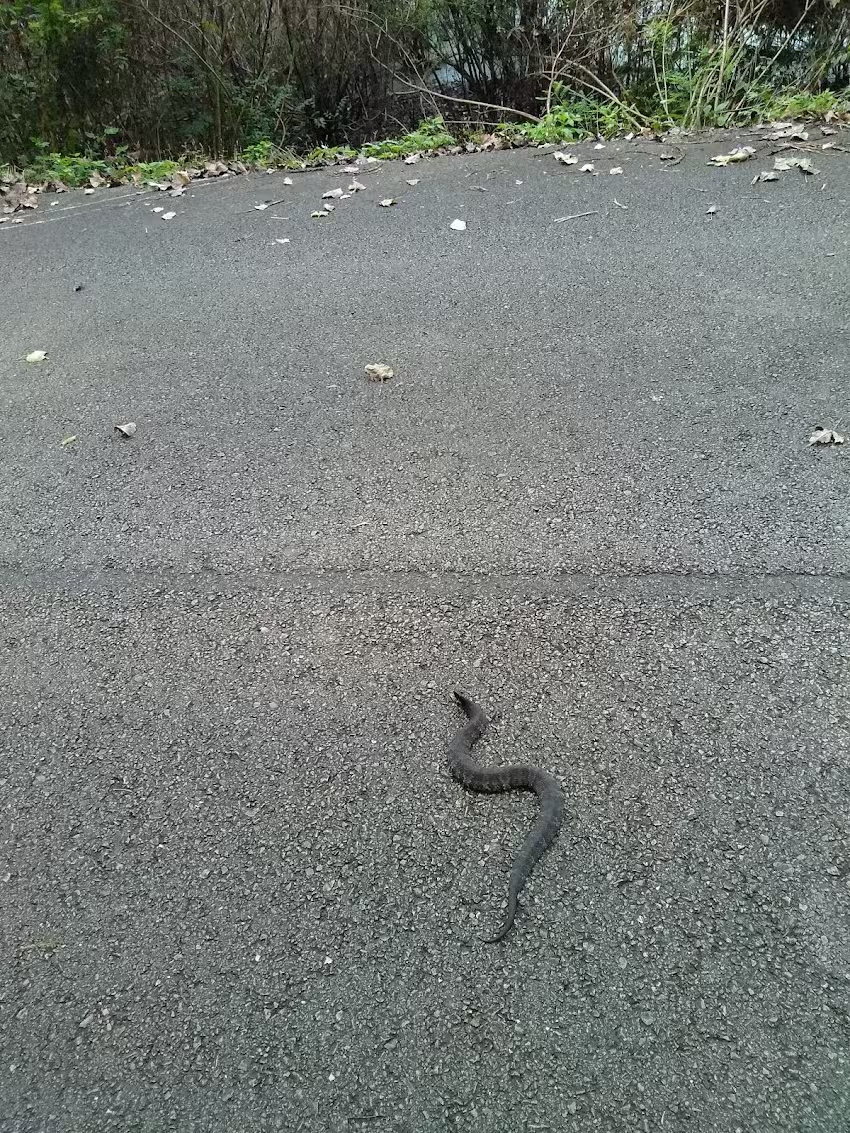
The center is the launchpad for a variety of recreational activities that form the core of the Mingo experience. One of the most praised features is the network of self-guided auto tours. With three distinct routes, including the 17-mile Ozark Highlands Auto Tour, visitors can observe different habitats from the comfort of their vehicles. This makes the refuge highly accessible to people with mobility issues and families with young children. For those seeking a more immersive experience, the center provides information on several walking trails. A highlight is the 0.8-mile Swampwalk Nature Trail, an accessible boardwalk that takes you directly through a portion of the Mingo Swamp, offering close-up views of cypress trees and the potential for spotting snakes, turtles, and various bird species. The area is a designated Important Bird Area, making bird watching trips a major draw, with opportunities to see everything from prothonotary warblers to bald eagles, which have nested here since 1985. Fishing for bass, crappie, and catfish is also a popular activity in designated areas.
The Positives: A Hub for Authentic Nature Encounters
For travelers interested in genuine ecotourism and adventure travel, the Mingo Visitor Center and the surrounding refuge offer a compelling package. Here are the primary advantages:
- Access to a Unique Ecosystem: The center is the gateway to one of Missouri's most distinct natural landscapes. User reviews consistently highlight the area's remote, peaceful, and beautiful character, noting its stark contrast to the nearby Ozark highlands. It provides a chance to see a well-preserved swampland ecosystem that is rare in the region.
- Excellent Wildlife Viewing Potential: As a key stop on the Mississippi Flyway, the refuge is a premier destination for wildlife tours. Visitors report sightings of bald eagles, a multitude of waterfowl, wild turkey, deer, and beavers. The sheer diversity of species makes every visit unpredictable and exciting.
- Well-Maintained and Accessible Options: The combination of extensive auto tours and accessible boardwalks makes the refuge approachable for a wide range of visitors. The facilities are noted as being well-cared-for, which enhances the overall experience. The visitor center itself is wheelchair accessible, ensuring that many can benefit from its resources.
- Educational Value: With its informative exhibits and helpful staff, the center excels at providing educational context. This transforms a simple sightseeing trip into a learning experience about conservation, ecology, and local history, making it ideal for school groups and curious families.
The Negatives: Crucial Planning is Non-Negotiable
Despite its strengths, the Mingo National Wildlife Refuge Visitor Center operates under constraints that can significantly impact a trip. Any potential visitor or tour operator must factor these realities into their travel itineraries.
- Severely Restricted Operating Hours: The most significant drawback is the visitor center's limited schedule. It is currently open only on Wednesdays, Fridays, and Saturdays from 10:00 AM to 4:00 PM, and is closed for the other four days of the week. This narrow window requires meticulous planning and can be inconvenient for travelers on a flexible schedule. Arriving on an off-day means missing out on maps, expert advice, and restroom facilities, which can be a major issue given the refuge's remote location.
- Remoteness and Lack of Services: The refuge is situated in a remote area. Visitors must be self-sufficient, arriving with a full tank of gas, food, and water. While the isolation is part of its appeal, the lack of nearby amenities means that poor planning can quickly lead to a difficult situation.
- Inconsistent Wildlife Sightings: While the potential for wildlife encounters is high, it is never guaranteed. Some visitors have noted that despite the beautiful scenery, they saw less wildlife than expected. It is important for travelers to manage their expectations and appreciate the natural environment for its own sake, rather than banking on specific animal sightings.
- Seasonal Challenges: As a natural swampland, the area is subject to seasonal conditions. Biting insects, particularly mosquitoes, can be a major issue during warmer months, necessitating strong insect repellent. Furthermore, some roads and trails may be closed due to weather or flooding, making it wise to call ahead or check the official FWS website before traveling.
- Hunting Seasons: The refuge is a popular destination for deer and waterfowl hunting. While this is a planned recreational use, it is a factor that non-hunting visitors should be aware of. During hunting seasons, certain areas may have restricted access, and the overall atmosphere of the refuge can change. Checking the official schedules for managed hunts is a critical step in planning a visit for observation or hiking.
Final Assessment for the Prospective Traveler
Ultimately, the Mingo National Wildlife Refuge Visitor Center is an indispensable resource for anyone wishing to properly experience the refuge. It provides the tools and knowledge needed to safely and appreciatively engage with a protected, wild environment. Its strengths lie in its educational capacity and its role as a starting point for diverse activities like auto tours, hiking, and premier bird watching.
However, the center's operational limitations cannot be overstated. The restrictive hours demand that a visit be a deliberate, well-planned event rather than a spontaneous stop. For those who can align their schedules and come prepared, the visitor center is the key that unlocks a truly memorable experience in one of Missouri's most significant natural treasures. It is not a full-service destination but a gateway, and success depends entirely on the visitor's willingness to plan ahead for a rewarding, self-guided adventure.