
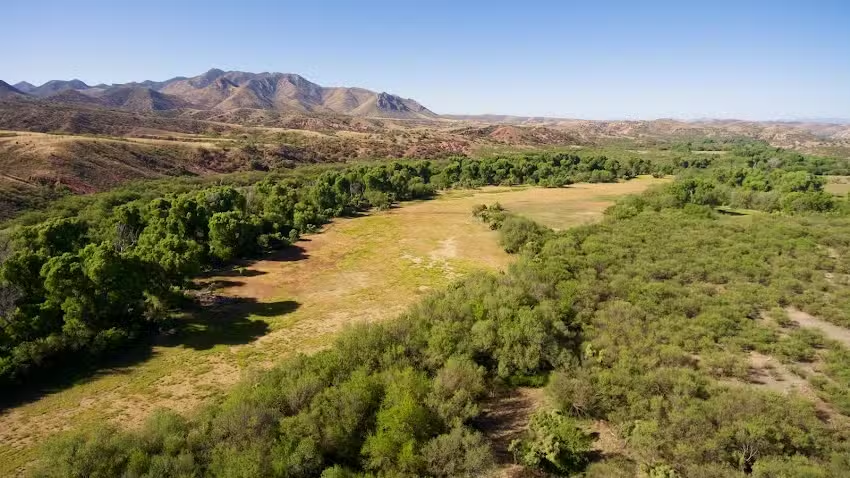
Patagonia-Sonoita Creek Preserve Visitor Center
BackLocated at 150 Blue Heaven Road in Patagonia, Arizona, the Patagonia-Sonoita Creek Preserve Visitor Center functions as a specialized travel agency for nature enthusiasts. Operated by The Nature Conservancy, its primary role is not to book flights or hotels, but to provide access and crucial travel information for one of the most significant riparian habitats in the American Southwest. For a modest entrance fee—typically around $8 for the general public—it offers a day-long, self-guided immersion into a vibrant ecosystem, making it one of the area's premier tourist attractions for those interested in ecotourism and outdoor activities.
The center serves as the gateway to the 873-acre preserve, which protects a rare and vital Fremont cottonwood-Goodding willow riparian forest. Some of these towering cottonwood trees are over 130 years old, creating a lush canopy that stands in stark contrast to the surrounding arid landscapes. This unique environment, sustained by the perennial flow of Sonoita Creek, supports an incredible level of biodiversity, making it a celebrated destination for visitors from around the world. The overall visitor sentiment is highly positive, with an average rating of 4.6 stars, reflecting a high degree of satisfaction with the experience offered.
The Positive Aspects: A Premier Nature Experience
The primary draw of the Patagonia-Sonoita Creek Preserve is its exceptional environment and the wildlife within it. Visitors consistently praise the well-maintained trails that meander along the creek and through the forest. The preserve offers several miles of easy-to-navigate walking paths, allowing for leisurely hikes suitable for most fitness levels. One popular route follows the old New Mexico-Arizona Railroad bed, while a newer, one-mile trail connects the preserve to the nearby Tucson Audubon's Paton Center for Hummingbirds, offering expansive views of the surrounding mountains and a walk through a dense mesquite bosque. The sheer scale of the ancient cottonwood trees is a frequently mentioned highlight, with their massive trunks and dense foliage providing ample shade and a serene atmosphere.
For those engaged in holiday planning centered around wildlife, this preserve is a top-tier destination. It is designated as an Audubon Important Bird Area and provides habitat for over 300 bird species. This makes it a globally recognized hotspot for birdwatching tours. Enthusiasts travel thousands of miles hoping to see rare and sought-after species. Among the regularly spotted birds are the Gray Hawk, Vermilion Flycatcher, Zone-tailed Hawk, and the elusive Yellow-billed Cuckoo. The riparian corridor acts as a major highway for migratory birds, meaning the diversity changes seasonally. According to The Nature Conservancy, the best months for birding are March through September, with peaks in late spring and late summer. However, the experience is not limited to birds; visitors have reported memorable encounters with Javelina, Coues White-tailed deer, and other native critters, adding an element of exciting unpredictability to any visit.
Another significant strength of this establishment is the quality of its staff. The visitor center is managed by volunteers who are consistently described as knowledgeable, helpful, and informative. Upon arrival, guests are often greeted, provided with a trail map, and given valuable tips for their hike, including recent wildlife sightings. This level of personalized service elevates the experience beyond a simple walk in the park, functioning as a form of expert consultation that is invaluable for first-time visitors and seasoned naturalists alike. This personalized guidance is a core tenet of what makes a good travel service.
Finally, the value proposition is excellent. The entrance fee, which supports The Nature Conservancy's conservation efforts in the region, is widely considered well worth the cost. It grants a full day of access and the opportunity to picnic on-site, making for a complete and affordable outing. The preserve has also modernized its amenities by installing a Level 2 public EV charger, a thoughtful addition for environmentally conscious travelers.
The Negative Aspects: Navigating the Limitations
Despite the overwhelmingly positive feedback, there are significant operational constraints that potential visitors must factor into their travel itinerary. The most prominent issue is the limited operating hours. The preserve is strictly closed on Mondays and Tuesdays, year-round. On the days it is open—Wednesday through Sunday—it closes its gates at 4:00 PM. This schedule can be a major inconvenience for travelers on a tight schedule or those who are unaware of the restrictions. Several visitors have expressed frustration after arriving in the late afternoon or on a closed day, only to find they cannot enter. This rigid schedule requires careful advance planning to avoid disappointment.
Furthermore, the hours change slightly with the seasons. From April to September, the hours are 6:30 AM to 4:00 PM, while from October to March, they shift to 7:30 AM to 4:00 PM. The preserve is also closed on major holidays like Thanksgiving, Christmas, and New Year's Day. While these details are available on their official website, they can be easily missed by tourists who are accustomed to more flexible attraction schedules. This limitation is the most frequently cited drawback and represents the primary negative point of the visitor experience.
While the preserve itself offers a tranquil escape, access can sometimes be affected by external factors. As noted by the Arizona Birding Trail, heavy rain events can make accessing the preserve difficult, a consideration for those planning a visit during monsoon season. Although parking on-site is generally sufficient, some visitors have commented on the scarcity of places to pull over on the roads leading to the preserve, which can be an issue for those hoping to do some roadside birdwatching before or after their visit.
Conclusion for the Traveler
The Patagonia-Sonoita Creek Preserve Visitor Center offers an exceptional product for a specific type of traveler. It is not a comprehensive travel agency but a gateway to a world-class natural sanctuary. For those interested in adventure travel focused on hiking, wildlife viewing, and especially birdwatching, it provides an unparalleled experience backed by knowledgeable staff and set within a breathtakingly beautiful and ecologically critical landscape. The well-maintained trails, abundant wildlife, and serene environment make the entrance fee a worthwhile investment in both a personal experience and a conservation cause.
However, the key to a successful visit lies in meticulous planning. The restrictive operating hours are a significant hurdle that cannot be overlooked. Prospective visitors must confirm the current schedule on The Nature Conservancy's website or by calling ahead at (520) 394-2400 before making the trip. By planning around the Wednesday-to-Sunday, 4:00 PM closing time, travelers can ensure they fully benefit from what this unique Arizona destination has to offer, avoiding the disappointment of a closed gate and a missed opportunity.