OPRD Whale Watching Center
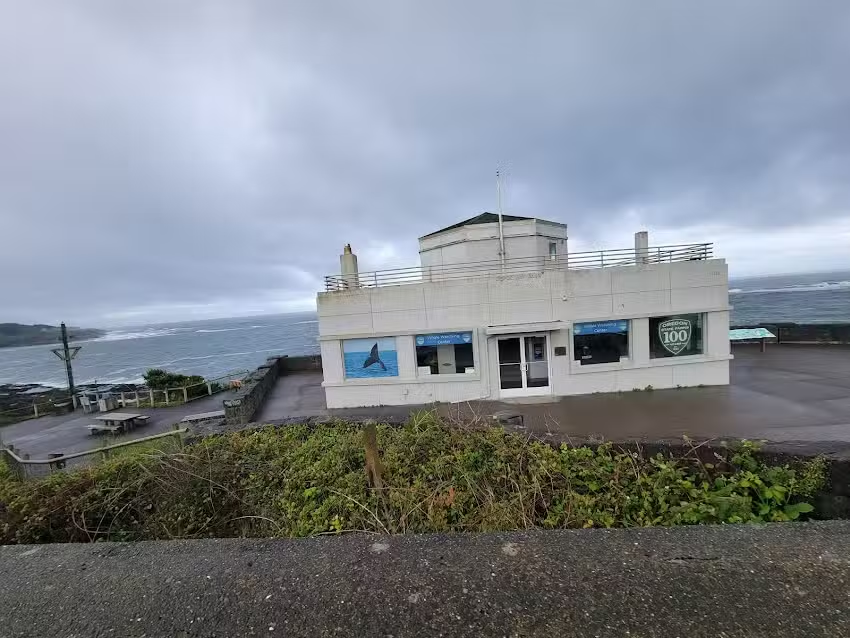
BackSituated directly on the seawall in Depoe Bay, the OPRD Whale Watching Center serves as a pivotal establishment for land-based marine life observation on the Oregon Coast. Operated by the Oregon Parks and Recreation Department, this center is more than just a viewpoint; it functions as an educational hub and a key resource for tourism in the region. Its primary focus is facilitating public viewing and understanding of the gray whale migration and the resident whales that frequent the area. With a high user rating of 4.8 based on over 600 reviews, it is clearly a valued institution, though it is not without its operational and logistical drawbacks that potential visitors should consider when planning their travel itineraries.
The Educational Experience and Staff Expertise
One of the most consistently praised aspects of the OPRD Whale Watching Center is its staff. Comprised of park rangers and a dedicated team of volunteers, the personnel are frequently described as exceptionally knowledgeable, friendly, and passionate. Visitors recount stories of staff members, like a volunteer named Bob, who go above and beyond to share fascinating details about gray whales, humpbacks, and orcas. This level of personal engagement transforms a simple sightseeing stop into a rich, educational session. The staff's ability to point out whales, explain their behaviors—such as spouting, breaching, or spyhopping—and share updated sighting data makes the experience accessible and exciting for everyone, from seasoned marine biologists to families with young children. This hands-on assistance is a form of informal guided tours from a fixed, accessible location.
The center itself is equipped with resources designed to enhance the visitor experience. Large panoramic windows offer protection from the elements while providing unobstructed views of the Pacific. For those who want a closer look, the center provides binoculars for public use, a crucial tool for spotting whales that might be further offshore. Inside, the facility is noted for being very clean and contains a variety of informative exhibits. These displays include whale bones, baleen samples you can touch, and detailed information about the biology and epic migration patterns of gray whales. An interesting feature is the regularly updated chart of recent sightings, which helps manage visitor expectations and builds a sense of community as visitors contribute to the daily count.
Prime Location for Wildlife Tours
Depoe Bay is famously known as the “Whale Watching Capital of the Oregon Coast,” and the center is strategically positioned to capitalize on this reputation. It offers a premier vantage point for one of nature's great spectacles. The eco-tourism appeal is significant, as visitors can witness wildlife with minimal disturbance to the animals' natural habitat. The center is a key site for the Oregon Whale Watch program, which organizes volunteers along the coast during the peak migration weeks in late December and late March.
While gray whales are the main attraction, the viewing opportunities are not limited to a single species. Humpback whales, orcas, dolphins, and even the occasional blue whale can be spotted from the center’s deck. The timing of a visit can greatly influence the experience. There are distinct whale watching seasons:
- Winter (Mid-December to Mid-January): Nearly 20,000 gray whales migrate south to the calving lagoons of Baja Mexico.
- Spring (Late March to June): The northbound migration occurs, with mothers and their new calves often swimming closer to shore.
- Summer and Fall (June to Mid-November): This is arguably the best time for viewing from Depoe Bay, as a resident population of about 200 gray whales stays to feed along the coast, often coming very close to shore. During this period, seeing between 5 and 15 whales daily is common.
This year-round presence of whales makes the center a reliable destination for any trip planner focused on nature travel. It provides a compelling alternative to commercial boat tours, offering a stable, comfortable, and free-of-charge platform for observation.
Challenges and Considerations for Visitors
Despite its many strengths, the OPRD Whale Watching Center has a few notable downsides that visitors must anticipate. The most significant issue, as highlighted by multiple visitors, is parking. The center is located directly on US-101, and parking is limited to angled spots along the side of the busy highway. Backing out of these spaces into heavy, fast-moving traffic can be stressful and difficult, described by one visitor as a "nightmare." This logistical hurdle can be a frustrating start or end to an otherwise positive experience, and visitors should exercise extreme caution.
Another critical point to consider is the center's limited operating hours. It is closed on Mondays and Tuesdays. This schedule can lead to disappointment for travelers who arrive on those days, as at least one reviewer noted. For anyone organizing a coastal excursion, it is essential to verify the center's open days (Wednesday through Sunday, typically from 10:00 AM to 4:00 PM) to avoid a wasted trip. These constraints require careful planning and flexibility.
Conclusion: A Balanced View
The OPRD Whale Watching Center is undeniably a premier destination for sustainable tourism and wildlife education on the Oregon Coast. Its strengths are powerful: an incredibly dedicated and knowledgeable staff, excellent educational resources, and a location that offers some of the best land-based whale watching in the world. It democratizes the experience, making it accessible to all without the cost of a charter boat.
However, it is not without its flaws. The challenging parking situation and the restrictive weekly schedule are practical issues that can impact a visit. Prospective visitors should weigh these factors carefully. For those who can plan around the closed days and navigate the parking, the center offers a deeply rewarding experience. It stands as a valuable public service, connecting people with the marine environment in a meaningful way and solidifying Depoe Bay’s status as a critical hub for sightseeing tours focused on the natural world. While not a conventional travel agency, it effectively directs and enriches the travel experience for thousands of visitors each year.